The US logistics recruitment market is changing. Automation, evolving workforce expectations and continued demand for specialist skills are reshaping how businesses attract and retain talent. For employers planning their next hire, understanding these changes has never been more important.
From distribution centers and transportation networks to manufacturing facilities and complex supply chains, logistics businesses across the United States are adapting to new technologies, economic uncertainty and changing customer expectations.
While the wider labor market has become more measured, competition for experienced logistics professionals remains significant, particularly in specialist disciplines and key regional markets.
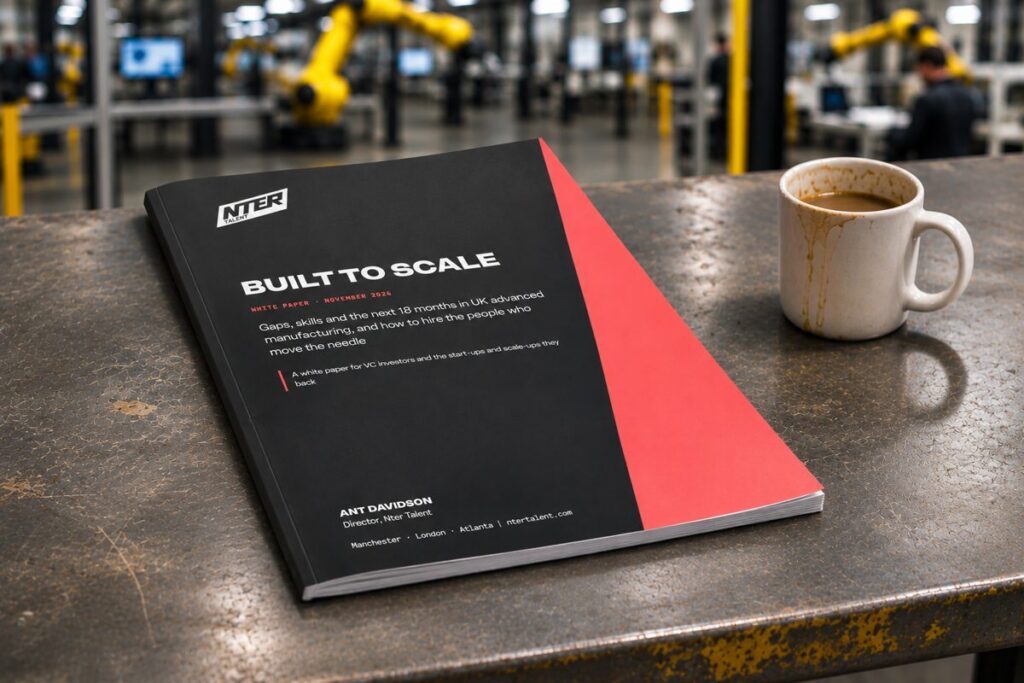
Nter Talent’s latest US Logistics Salary Guide & Hiring Report 2026 explores the trends influencing recruitment, provides salary benchmarks for 19 logistics and supply chain roles, and identifies the strategies helping employers build stronger workforces.
US logistics recruitment remains competitive despite a changing labor market
The American hiring market is entering a more considered phase, but that doesn’t necessarily mean specialist logistics talent is becoming easier to secure.
According to the US Bureau of Labor Statistics, there were approximately 7.1 million job openings in August 2026, with 5.2 million hires recorded during the same month.
Although recruitment activity has moderated from the exceptional levels experienced earlier in the decade, employers continue to recruit at considerable scale.
For logistics businesses, however, national employment statistics only tell part of the story.
The demand for an experienced distribution center manager, supply chain director or transportation specialist can be very different from the wider employment picture.
The Bureau of Labor Statistics projects employment of logisticians to grow by 17% between 2024 and 2034, significantly faster than the average for all occupations. This represents approximately 26,400 job openings annually.
For employers, recruitment success increasingly depends on understanding the specific skills, experience and capabilities required rather than relying on broader labor market trends.
Logistics skills shortages are becoming increasingly specialized
Historically, many logistics recruitment challenges centered on warehouse associates, truck drivers and frontline operational employees.
These roles remain essential, but the industry is experiencing a significant shift in the capabilities businesses need.
Automation, warehouse management systems, robotics, artificial intelligence and advanced supply chain planning are transforming operational requirements.
As a result, demand is growing for professionals who can combine technical expertise with commercial understanding and practical leadership.
Some of the increasingly important roles include:
- Automation and controls engineers capable of implementing and maintaining advanced warehouse technologies.
- Continuous improvement managers who can optimize processes, improve productivity and reduce operational costs.
- Supply chain analysts with expertise in forecasting, data analysis and network optimization.
- Warehouse management systems specialists experienced in technology implementation and operational transformation.
- Operations leaders capable of managing complex, technology-enabled distribution networks.
For hiring teams, the challenge is no longer simply identifying candidates with logistics experience. It is finding professionals with the capabilities to improve how logistics operations perform.
Automation is transforming logistics recruitment
Automation is one of the most influential developments shaping the future of American logistics.
Businesses are investing in robotics, automated storage and retrieval systems, digital inventory management and increasingly sophisticated forecasting technologies.
These investments create opportunities to improve efficiency, accuracy and productivity. However, they also introduce new workforce requirements.
An automated distribution center still needs experienced people. It simply requires a different combination of skills.
Employers increasingly need professionals who can implement new technologies, manage operational change, maintain sophisticated equipment and ensure that automation investments deliver measurable business value.
This makes workforce planning an essential part of any automation strategy.
Rather than waiting until new systems are operational, businesses should identify the skills required to support implementation, integration and ongoing performance well in advance.
US logistics salary benchmarks for 2026
Competitive compensation remains a critical consideration for employers recruiting experienced logistics and supply chain professionals.
Our latest salary guide provides indicative annual base salary ranges for 19 roles across warehousing, distribution, transportation, supply chain, technical operations and leadership.
Selected benchmarks from the report include:
Warehousing and distribution salaries
- Warehouse Supervisor: $55,000 – $72,000
- Inventory Control Manager: $70,000 – $95,000
- Warehouse / Distribution Center Manager: $85,000 – $125,000
- General Manager, Distribution Center: $120,000 – $165,000
Transportation salaries
- Dispatcher / Transport Planner: $48,000 – $65,000
- Fleet Manager: $75,000 – $105,000
- Transportation Manager: $85,000 – $120,000
Supply chain and procurement salaries
- Logistics Analyst: $60,000 – $82,000
- Supply Chain Analyst: $68,000 – $95,000
- Demand Planner: $72,000 – $100,000
- Procurement Manager: $95,000 – $135,000
- Supply Chain Director: $160,000 – $230,000
- VP, Supply Chain: $210,000 – $320,000
These figures represent indicative annual base salaries and exclude bonuses, overtime and benefits. Actual compensation varies according to location, responsibilities and specialist experience.
Our research also identifies a salary premium for candidates with proven automation or warehouse management systems implementation experience, with relevant expertise potentially commanding 10-15% above equivalent roles.
For businesses reviewing their compensation strategies, location-specific salary benchmarking is essential.
Download Nter Talent’s full US Logistics Salary Guide & Hiring Report 2026 for salary ranges covering all 19 roles, regional considerations and additional hiring insights.
Regional differences are shaping logistics hiring strategies
The United States is not one recruitment market.
Hiring conditions vary significantly between states, cities and major logistics corridors.
A distribution center in Southern California may face very different recruitment challenges from a manufacturing operation in Ohio or a rapidly expanding logistics network in Texas.
Salary expectations, local competition, candidate availability and commuting patterns can all influence recruitment outcomes.
Our report highlights that, in August 2026, the job openings rate was 4.5% across the South, compared with 4.1% in the West and 3.9% in the Northeast.
These regional differences demonstrate why employers should avoid relying exclusively on national recruitment data.
For businesses expanding into new locations, conducting talent mapping, salary benchmarking and competitor analysis before launching major hiring programs can help identify potential challenges early.
Manufacturing and supply chain recruitment are becoming increasingly connected
Logistics recruitment cannot be considered in isolation from manufacturing.
Across the United States, food manufacturers, consumer packaged goods businesses and industrial organizations depend on effective supply chains to maintain production, manage inventory and deliver products to customers.
This creates considerable overlap in the skills employers require.
Manufacturing businesses frequently need production managers, procurement professionals, warehouse leaders, transportation specialists and supply chain planning experts working together to maintain operational performance.
According to the Bureau of Labor Statistics, approximately 17,000 annual openings are projected for industrial production managers between 2025 and 2035.
For employers, this overlap creates opportunities to recruit professionals with transferable experience from adjacent industries.
Rather than limiting recruitment to candidates with identical sector backgrounds, businesses can benefit from considering relevant operational, technical and leadership capabilities.
Nter Talent supports employers in identifying these skills through our specialist supply chain and procurement recruitment services, helping businesses access experienced professionals across interconnected industries.
Candidate expectations are changing
Competitive salaries remain important, but compensation alone rarely determines whether an experienced professional accepts a new opportunity.
Today’s logistics candidates increasingly want to understand the quality of leadership, opportunities for career development, organizational stability and the investment being made in technology.
For senior professionals, the opportunity to influence business performance can be particularly attractive.
A supply chain director may be motivated by the opportunity to lead a major transformation program, while a distribution center manager may prioritize progression into regional leadership.
Similarly, an automation specialist may be particularly interested in gaining experience with advanced technologies.
Employers that recognize these different motivations and communicate a compelling opportunity are better positioned to attract experienced professionals.
This means moving beyond standard job descriptions and clearly explaining the impact, responsibilities and development opportunities associated with each role.
Hiring speed remains a competitive advantage
Even when more candidates are available, recruitment processes can become a barrier to securing the best people.
Lengthy interview schedules, unclear decision-making and delays between recruitment stages can weaken candidate engagement.
This is particularly relevant when recruiting experienced professionals who are already employed and may be considering several opportunities simultaneously.
Employers should prioritize structured recruitment processes that combine thorough assessment with clear communication and timely decisions.
A positive recruitment experience can play an important role in securing specialist logistics talent, particularly when competing against other employers for candidates with highly sought-after capabilities.
Building talent pipelines before vacancies appear
One of the most effective ways to improve recruitment performance is to establish relationships with potential candidates before an immediate hiring requirement exists.
This is especially important for senior and specialist appointments.
Businesses that regularly recruit transportation managers, supply chain directors, warehouse leaders and continuous improvement specialists should already understand where relevant talent exists.
Proactive talent mapping enables employers to monitor changing market conditions, identify potential candidates and establish relationships that can be developed over time.
It also reduces the pressure associated with starting every recruitment process from scratch.
Through our specialist logistics recruitment services, Nter Talent helps businesses identify and engage experienced professionals across the US logistics market.
Retention and workforce development must remain priorities
Recruiting an experienced logistics professional represents a significant investment.
When that individual leaves prematurely, the consequences can extend beyond replacement costs to include operational disruption, reduced productivity and additional management time.
Retention should therefore be considered throughout the recruitment process.
Employers need to communicate realistic expectations, provide clear development opportunities and ensure candidates understand the working environment and challenges they will face.
Businesses must also invest in developing their existing workforce.
Apprenticeships, technical training, leadership development and partnerships with educational institutions can help create stronger long-term talent pipelines.
Developing high-potential employees from frontline operational roles into management positions can also strengthen retention and reduce reliance on external recruitment.
Download the US Logistics Salary Guide & Hiring Report 2026
As the American logistics industry continues to evolve, employers need reliable market insight to make informed recruitment decisions.
Nter Talent’s latest US Logistics Salary Guide & Hiring Report 2026 provides a detailed overview of the trends, challenges and opportunities shaping logistics recruitment across the United States.
Inside the report, you’ll discover:
- 2026 salary benchmarks for 19 logistics and supply chain roles.
- US labor market insights and changing recruitment conditions.
- Specialist skills shortages and emerging workforce requirements.
- Automation and technology trends influencing future hiring.
- Regional recruitment considerations across the United States.
- Practical hiring and retention strategies to support business growth.
Download the full report to benchmark your salaries, understand the evolving talent market and plan your next recruitment decisions with greater confidence.
Specialist US logistics recruitment from Nter Talent
At Nter Talent, we support businesses across the United States with specialist recruitment spanning logistics, supply chain, procurement, consumer packaged goods, food manufacturing and data centers.
Our approach combines industry knowledge, targeted talent identification and a commitment to understanding the individual requirements of every organization we support.
Whether you’re recruiting an experienced operations leader, expanding a distribution network or building a specialist supply chain team, we help connect businesses with the people capable of delivering meaningful results.
Planning your next hire? Get in touch with Nter Talent to discuss your recruitment requirements and access specialist US market insight.